

Alchimistes de la cuisine
La cuisine a toujours été un lieu de transformation. Le feu, l'eau, la terre et l'air convergent au-dessus du fourneau. Les ingrédients bruts deviennent nourriture. Les étrangers deviennent une famille autour de la table. Pour ceux qui pratiquent la sorcellerie traditionnelle, la cuisine n'est pas simplement une pièce de la maison. C'est un temple, un laboratoire et un lieu où le banal et le magique s'entremêlent à chaque coup de cuillère.
La sorcellerie culinaire, parfois appelée magie du foyer ou sorcellerie domestique, est l'une des formes les plus anciennes et les plus accessibles de magie populaire. Elle ne requiert pas d'outils élaborés, d'ingrédients coûteux ou des années d'études. Elle demande seulement que vous apportiez intention, conscience et révérence aux actes que vous accomplissez déjà chaque jour. En mars, alors que la terre commence à sortir de son sommeil hivernal, la cuisine devient un espace particulièrement puissant pour semer des intentions, nourrir une croissance lente et se préparer à la saison de l'éveil à venir.
Les racines de la magie culinaire
La sorcellerie du foyer n'est pas une invention moderne. Elle est tissée dans le tissu de l'histoire humaine, traversant les cultures et les continents. Dans la Rome antique, Vesta, déesse du foyer, était honorée à chaque repas préparé et à chaque feu allumé. Dans les traditions celtiques, le foyer était considéré comme le cœur de la maison, un lieu où les ancêtres se réunissaient et où des charmes protecteurs étaient accrochés. Les foyers slaves apaisaient le domovoi, un esprit du foyer, avec des offrandes de pain et de lait.
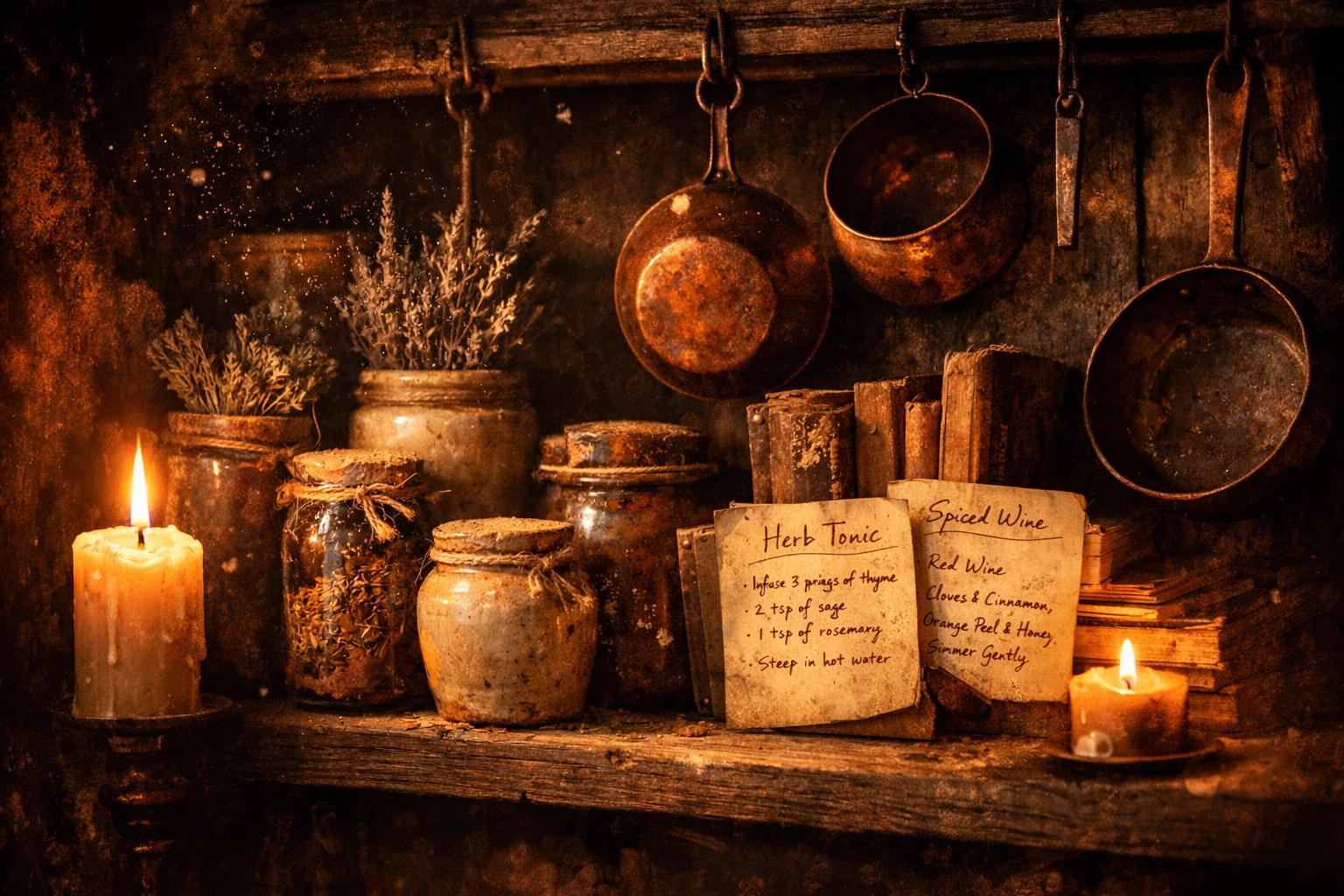
À travers ces traditions, un fil conducteur commun émerge : la cuisine est sacrée parce qu'elle soutient la vie. La sorcière qui entretient le foyer entretient la force vitale de la maison. Elle transforme la matière brute en subsistance, tout comme l'alchimiste transforme le plomb en or. La différence est que l'alchimie culinaire est ancrée dans le quotidien, dans l'odeur du romarin s'élevant de la marmite, le sifflement de l'ail dans l'huile chaude, la couleur des betteraves qui tachent vos mains en écarlate.
C'est une magie lente. Elle n'exige ni spectacle ni drame. Elle se déploie dans la répétition des tâches quotidiennes, dans le soin apporté au choix des ingrédients, dans l'intention murmurée en broyant du sel ou en mélangeant du miel dans le thé. La sorcellerie culinaire honore le sacré dans le petit, le pouvoir dans le pratique, le divin dans le domestique.
Éléments clés de la sorcellerie culinaire
Au fond, la magie de la cuisine tourne autour de trois principes : l'intention, la correspondance et la transformation.
L'intention est la signature énergétique que vous apportez à votre travail. Lorsque vous cuisinez avec intention, vous ne suivez pas simplement une recette. Vous dirigez de l'énergie vers un résultat spécifique. Une soupe préparée avec l'intention de guérir porte une énergie différente de celle préparée avec l'intention d'ancrage ou de protection. Les ingrédients peuvent être identiques, mais le focus de la sorcière façonne le résultat.
La correspondance fait référence aux propriétés magiques inhérentes aux ingrédients eux-mêmes. Chaque herbe, épice, fruit et grain porte sa propre signature énergétique. La cannelle invite la prospérité et la passion. Le thym offre courage et clarté. L'ail procure une protection féroce. Lorsque vous cuisinez en tenant compte de ces correspondances, vous amplifiez la magie déjà présente dans la nourriture.
La transformation est le processus alchimique lui-même. Cuisiner, c'est transformer. La chaleur modifie la texture, libère l'arôme, altère la structure chimique. L'eau ramollit ce qui est dur. Le feu caramélise le sucre en or. Dans la sorcellerie traditionnelle, la transformation est toujours magique. La sorcière de cuisine le comprend et travaille consciemment avec cela, utilisant les outils de son art (couteau, flamme, cuillère, bol) pour diriger l'énergie et manifester l'intention.
Alliés herbes en cuisine
La pratique de l'herboristerie culinaire fait le pont entre la tradition culinaire et l'art magique. De nombreuses herbes présentes dans votre placard sont utilisées depuis des siècles à la fois pour la guérison et les sorts. Connaître leurs correspondances vous permet de cuisiner avec une intention plus grande et d'intégrer la magie à chaque repas.
Le basilic est sacré pour la prospérité, l'amour et la protection. Dans la magie populaire italienne, il était cultivé sur les rebords de fenêtre pour protéger la maison. Ajoutez du basilic frais à vos sauces pour pâtes lorsque vous souhaitez inviter l'abondance ou renforcer les liens familiaux.
Le romarin est l'herbe de la mémoire, de la clarté et de la purification. Il a été utilisé dans les cuisines méditerranéennes pour sa saveur et sa protection. Un brin de romarin dans l'eau de cuisson purifie les énergies stagnantes. Frotté sur des légumes rôtis, il aiguise la concentration mentale et honore les ancêtres.
Le thym offre courage, force et purification. Il était porté par les chevaliers médiévaux pour la bravoure et brûlé dans les temples pour purifier les lieux sacrés. Lorsque vous cuisinez avec du thym, vous invitez la fortitude et la résilience dans votre corps et votre maison.
La cannelle est l'un des ingrédients les plus puissants de la magie culinaire. Elle attire la prospérité, enflamme la passion et élève les vibrations. Une pincée de cannelle dans votre café du matin devient un sortilège de réussite. Mélangée à des pâtisseries, elle adoucit les relations et invite la chaleur.
L'ail est féroce, protecteur et ancrant. Il a été utilisé à travers les cultures pour éloigner le mal, purifier les espaces et fortifier le corps. Cuisiner avec de l'ail crée une barrière protectrice autour de votre foyer, à la fois énergétiquement et physiquement.
Le gingembre stimule l'énergie, le courage et le pouvoir personnel. Il réchauffe le corps, aiguise l'esprit et accélère la manifestation. Du gingembre frais râpé dans des sautés ou infusé dans du thé apporte un élan ardent aux intentions stagnantes.
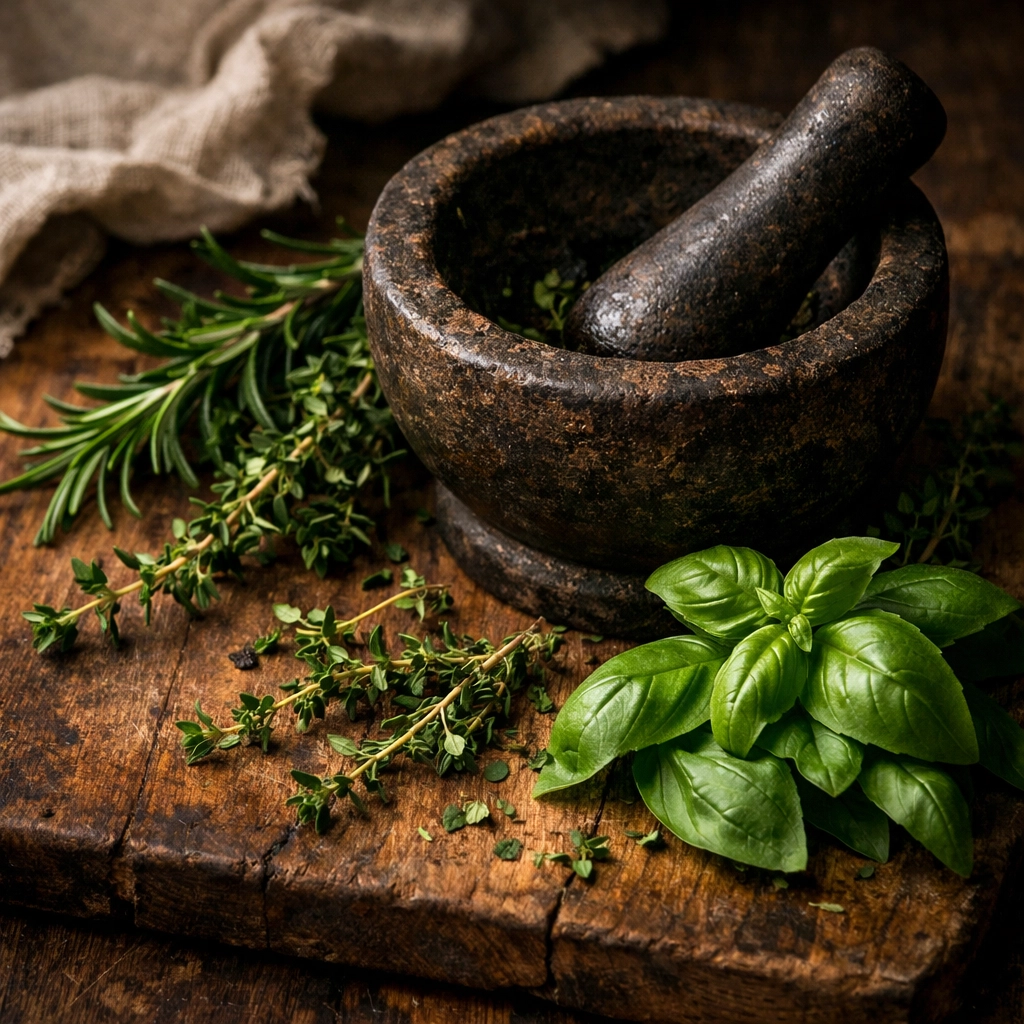
Ce ne sont là que quelques exemples. Votre cuisine recèle probablement des dizaines d'alliés magiques. En apprenant leurs correspondances, vous commencerez à voir votre étagère à épices non pas comme une collection de saveurs, mais comme une materia magica, une pharmacie vivante d'intention et de pouvoir.
Magie culinaire pratique pour mars
Mars est le mois de l'éveil, des graines plantées sous la terre, de la croissance précoce qui ne peut pas encore être vue mais qui est ressentie. La magie de cette saison est douce, patiente et enracinée dans la préparation. La sorcellerie de cuisine offre une belle façon d'honorer cette énergie.
Infusions matinales d'intention
Commencez votre journée avec un simple thé d'intention. Faites bouillir de l'eau avec du gingembre frais et du citron pour éveiller la clarté et le courage. Ajoutez du miel pour adoucir votre chemin. Pendant que vous remuez, exprimez votre intention à voix haute ou gardez-la silencieusement dans votre cœur. Buvez lentement, en sentant la chaleur se répandre dans votre corps, activant l'énergie que vous souhaitez cultiver.
La magie du pain
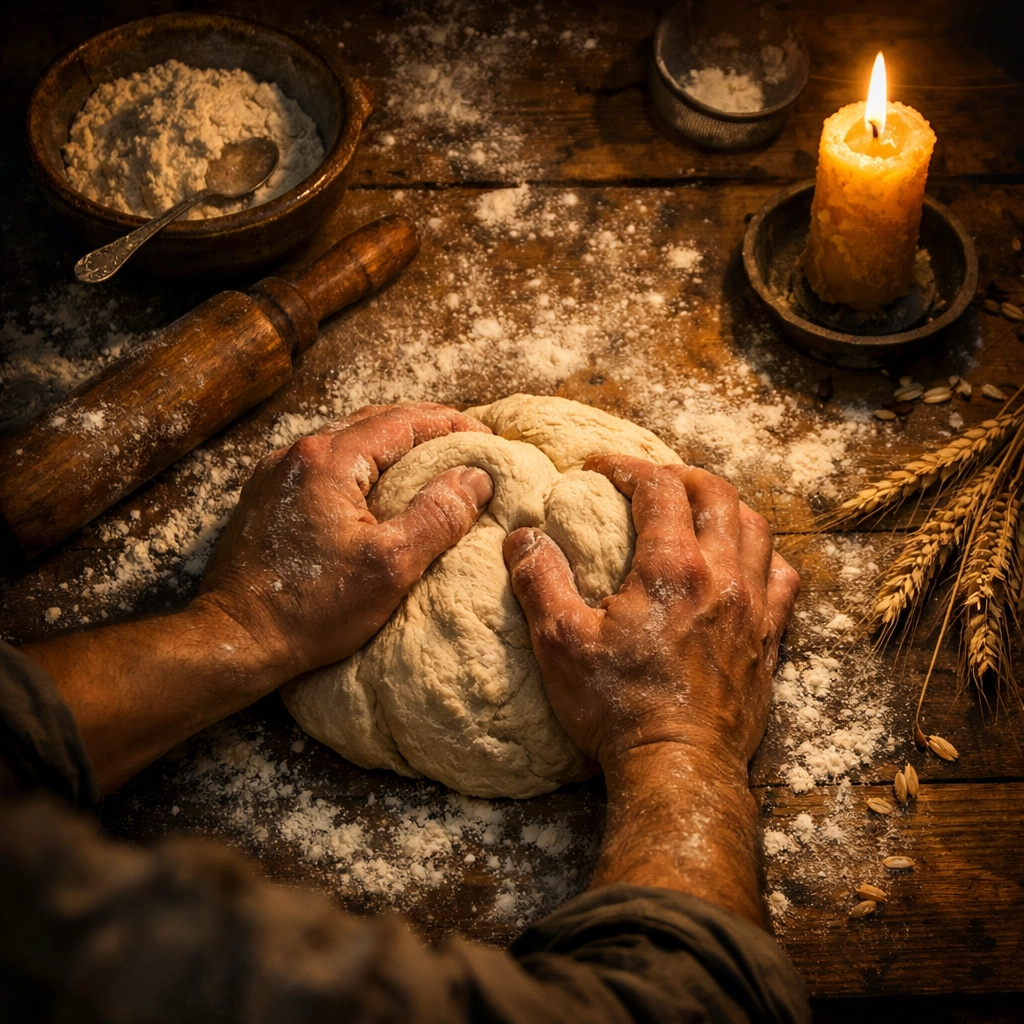
Faire du pain est l'une des plus anciennes formes d'alchimie culinaire. Pétrir la pâte est méditatif, rythmique, ancrant. Pendant que vous pétrissez, visualisez votre intention imprégnée dans la pâte. Prononcez des mots de bénédiction, de protection ou d'abondance. L'acte de pétrir lui-même est transformateur, transformant des ingrédients distincts en un tout unifié. Lorsque le pain cuit, la chaleur complète le sort, et le parfum emplit votre maison de magie.
Sortilèges à remuer
Tout plat qui nécessite d'être remué offre une opportunité de travail magique. Remuez dans le sens des aiguilles d'une montre (deosil) pour attirer quelque chose vers vous : abondance, amour, santé, clarté. Remuez dans le sens inverse des aiguilles d'une montre (widdershins) pour bannir ou libérer : anxiété, stagnation, vieux schémas, mal. Combinez cela avec des correspondances herbacées et une intention prononcée pour un sort simple mais puissant tissé dans le dîner.
Offrandes de seuil
Dans de nombreuses traditions populaires, des offrandes de nourriture et de boisson étaient déposées aux portes, aux foyers et aux fenêtres pour honorer les esprits du foyer et les forces protectrices. En mars, alors que le seuil entre l'hiver et le printemps s'amincit, pensez à laisser de petites offrandes : un bol de lait et de miel, du pain et du sel, ou des fruits de saison. Cette pratique reconnaît les forces invisibles qui protègent votre maison et invite leur bénédiction continue.
L'alimentation saisonnière comme rituel
Manger de saison est en soi une forme de magie. Cela vous connecte aux rythmes de la terre et honore la nature cyclique de la croissance et du déclin. Au début du printemps, recherchez les premières verdures : pissenlit, ortie, ail des ours. Ces jeunes plantes portent une force vitale puissante. Elles nettoient le corps après la lourdeur de l'hiver et réveillent la vitalité. Les préparer devient un acte d'alignement avec la saison, une façon d'accorder votre corps à l'éveil de la terre.
Le sacré ordinaire
L'un des plus grands dons de la sorcellerie culinaire est son insistance sur le sacré ordinaire. Vous n'avez pas besoin d'attendre un sabbat ou une pleine lune pour pratiquer la magie. Vous n'avez pas besoin de robes spéciales, d'autels élaborés ou de rituels complexes. La magie est déjà là, dans la vapeur qui s'élève de la marmite, dans l'odeur des oignons qui caramélisent, dans le simple acte de vous nourrir et de nourrir ceux que vous aimez.
C'est le cœur de la sorcellerie traditionnelle : la compréhension que la magie n'est pas séparée de la vie. Elle est tissée dans chaque tâche, chaque choix, chaque instant. La sorcière de cuisine le sait intimement. Elle ne divise pas sa vie en magique et mondain. Elle reconnaît que chaque acte de nourriture, chaque repas préparé avec soin, chaque herbe choisie avec intention, est un acte de pouvoir.
Alors que mars se déroule et que la terre se prépare à la croissance, la cuisine devient un lieu d'alchimie douce. Ici, vous semez des intentions dans les soupes et les ragoûts. Vous insufflez de la possibilité dans les sauces. Vous cuisez la transformation dans le pain. Vous entretenez le foyer, et ce faisant, vous entretenez le feu sacré en vous-même.
L'alchimiste de cuisine n'attend pas des conditions parfaites ou des circonstances idéales. Elle travaille avec ce qui est disponible, ce qui est saisonnier, ce qui est réel. Elle fait confiance à la magie lente de la pratique quotidienne, au pouvoir cumulatif des petits actes répétés avec amour. Et de cette façon, elle transforme non seulement les ingrédients, mais elle-même.
Que vous soyez un praticien expérimenté ou nouveau sur le chemin, la sorcellerie culinaire offre une pratique ancrée, accessible et profondément gratifiante. Elle ne demande rien de plus que votre présence, votre intention et votre volonté de voir la magie déjà présente dans les actes quotidiens de nourriture et de soin.