
Iron, Salt, and Rowans
Protection magic is not new. Long before books filled with correspondences and long before the word "witchcraft" became searchable online, people protected their homes and families with what they had: iron nails, salt from the cellar, and rowan branches growing near the threshold. These three materials form the foundation of traditional folk charms across Britain, Ireland, Scotland, and parts of Northern Europe. They are simple. They are powerful. They carry the weight of centuries.
If you are building a practice rooted in folk magic and traditional witchcraft, iron, salt, and rowans are tools you will return to again and again. They do not require elaborate ritual or complex preparation. They ask only for intention, respect, and understanding of what they represent.
The Power of Iron
Iron has long been considered a guardian metal. In folklore, it wards off spirits, disrupts malevolent magic, and protects against beings from the Otherworld, particularly the Fair Folk. Iron is grounded, dense, and earthbound. It belongs to the forge, the hearth, and the working hand. It does not bend to enchantment.
Across Celtic and Northern European traditions, iron nails were driven into doorframes, buried at thresholds, or hung above windows. Horseshoes (always made of iron) were mounted above doors, open end facing upward to hold protective energy. Blacksmiths were considered powerful figures, not only for their craft but because they worked with iron itself, transforming raw metal into tools of protection and survival.
In practice, iron disrupts and deflects. It does not invite. It does not welcome. It holds the line. If you are working with protective boundaries, iron is your ally. A simple railroad spike placed at your door, an old iron key hung on a nail, or even a cast iron pan kept near the hearth carries this energy.
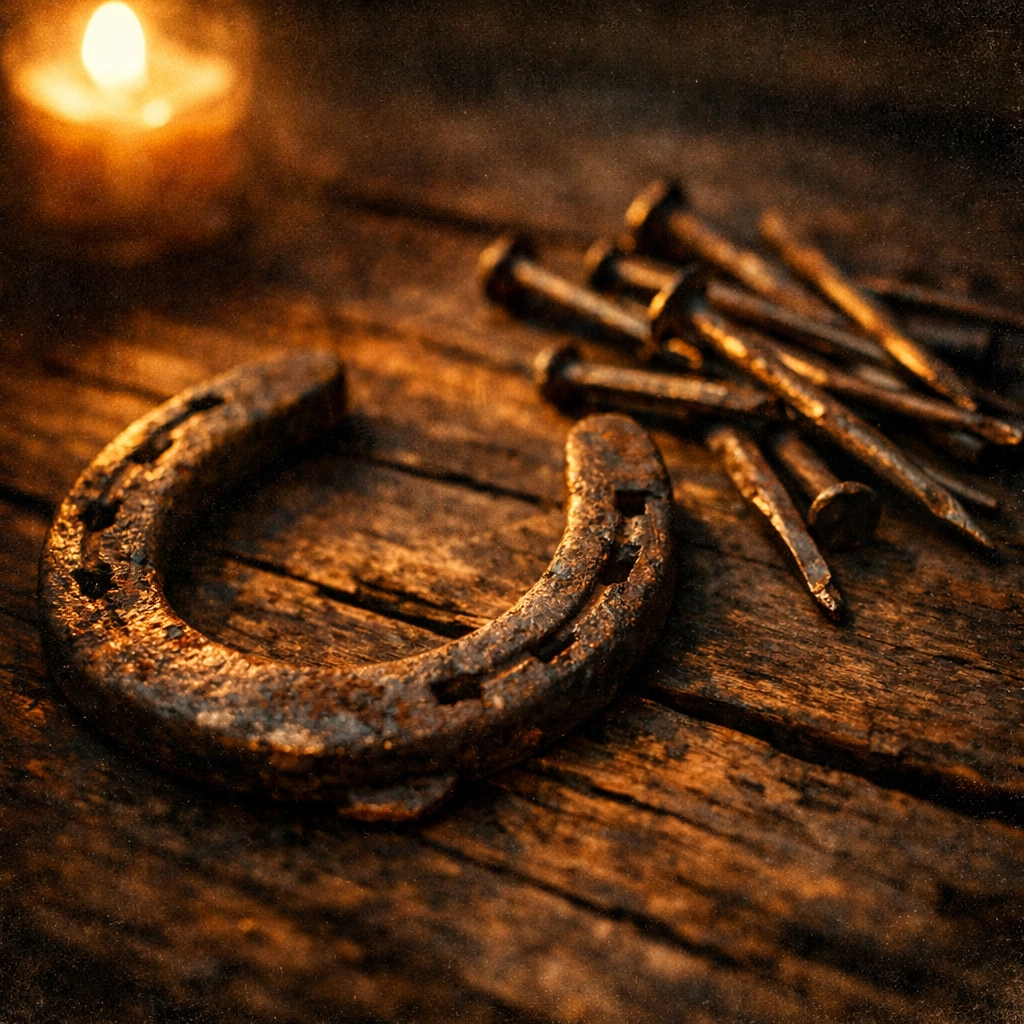
Iron does not need to be polished or ornamental. In fact, the rougher and more practical the iron, the stronger its protective resonance. This is folk magic at its most direct.
The Sacredness of Salt
Salt is the preserver, the purifier, the boundary maker. It has been used in protective magic for as long as humans have harvested it from the sea or the earth. Salt stops decay. It draws out moisture, corruption, and stagnation. In magical practice, it disrupts negative energy and creates clear, defined thresholds.
In traditional folk magic, salt lines were drawn across doorways to prevent unwanted spirits or energies from crossing. Salt was thrown over the left shoulder to blind the Devil or any malicious force waiting behind. It was mixed into wash water for floors, added to protective sachets, and buried at property corners to mark sacred or protected space.
Salt represents both preservation and transformation. It holds what is sacred and keeps out what does not belong. It is abundant, accessible, and requires no special preparation. Plain sea salt or rock salt works just as well as anything ceremonial. In fact, the simpler, the better.
You can sprinkle salt along windowsills, place small bowls of it in the corners of rooms, or dissolve it in water to cleanse ritual tools and spaces. Salt does not need to be seen to work. It simply holds the line, quietly and without fuss.
The Protection of Rowan Wood
Rowan (also called mountain ash) is one of the most potent protective trees in Celtic and Northern European folk magic. It was planted near homes to guard against enchantment, misfortune, and ill-wishing. Rowan trees were believed to repel harmful spirits, particularly those associated with the Fair Folk and other Otherworldly beings.
The tree itself is distinctive: small, hardy, with delicate leaves and bright red berries that appear in late summer. The berries carry a five-pointed star (a natural pentagram) at their base, which added to their protective reputation. In Scottish and Irish tradition, rowan wood was never burned casually. It was sacred, reserved for charms and protective crafts.
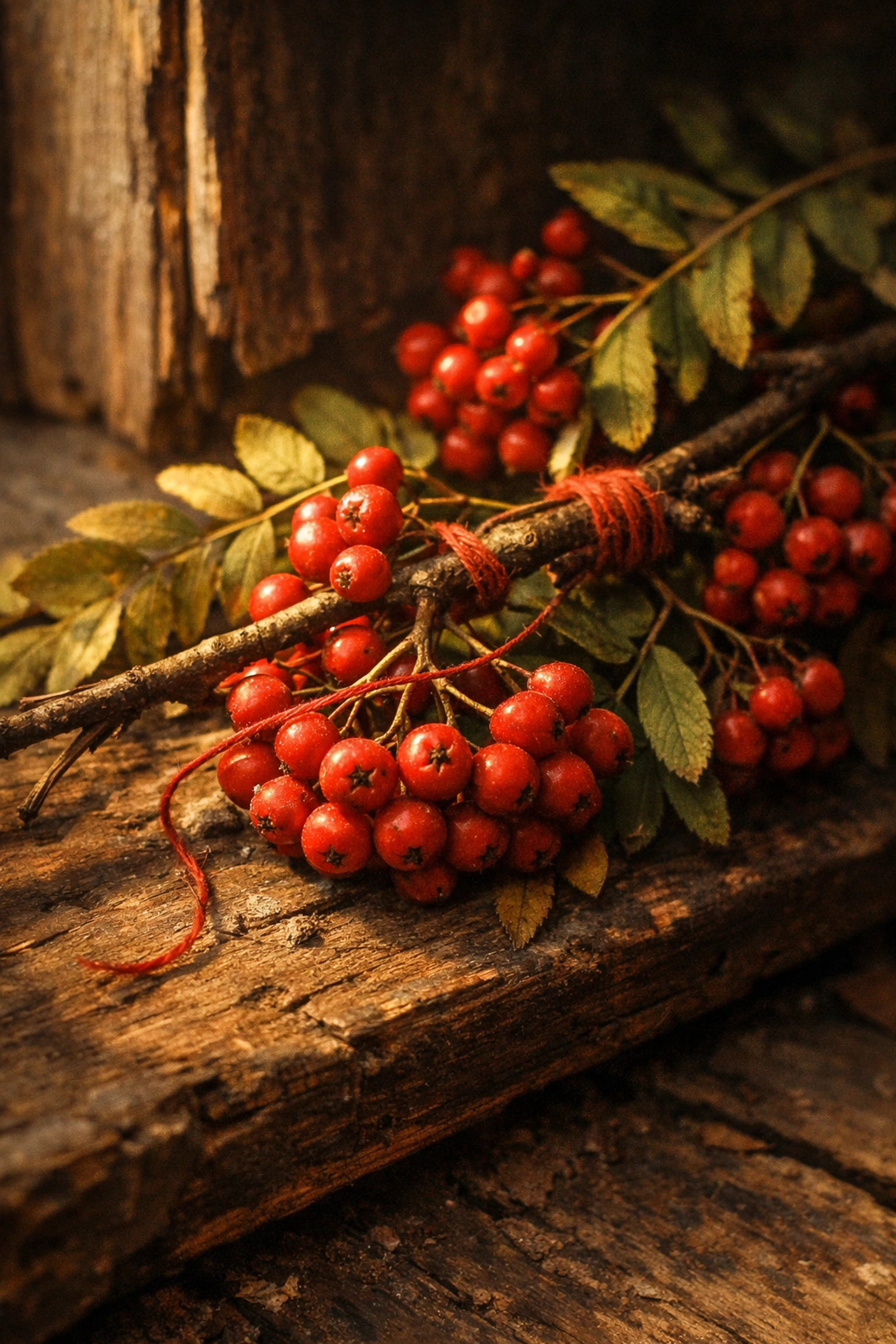
Rowan twigs were tied with red thread (red being a colour of protection and life force) and hung above doors, tucked into pockets, or woven into cradles to protect children. Rowan crosses, made by binding two small twigs together in an equal-armed cross, were placed above thresholds, in barns, and even carried while travelling.
If you have access to rowan wood, treat it with respect. Gather fallen twigs rather than cutting from a living tree unless you are certain of your relationship with that tree and its spirit. A small rowan twig, bound with red thread and hung near your door, is a traditional and potent charm that requires no other embellishment.
Working with All Three: Iron, Salt, and Rowans Together
The real strength of these materials comes when they are combined. Together, they form a triad of protection that covers multiple layers: iron disrupts and deflects, salt purifies and holds boundaries, and rowan wards against enchantment and spiritual interference.
A classic folk charm involves placing a horseshoe above the door (iron), sprinkling salt across the threshold, and hanging a rowan cross just inside the entrance. This creates a layered defence: iron keeps harmful magic and spirits from entering, salt cleanses what approaches, and rowan guards the household against unseen influence.
You can adapt this framework to your own home and practice. Consider these traditional methods:
- Threshold Protection: Drive an iron nail into the doorframe (discreetly, if needed), lay a thin line of salt just inside the door, and hang a rowan twig bound with red thread nearby.
- Room Cleansing: Use salt water (salt dissolved in spring or tap water) to wipe down surfaces, place a small piece of iron (a nail, a key, an old hinge) in a corner, and keep a sprig of rowan on a shelf or windowsill.
- Portable Charms: Carry a small sachet containing a pinch of salt, a tiny iron nail or shaving, and a bit of dried rowan berry or twig. Bind it with red thread or keep it in a small pouch.
- Seasonal Renewal: Refresh protective charms at the turning of the seasons, particularly at Samhain (when the veil thins) and at the Spring Equinox (when new growth begins and protection must be re-established).
These are not elaborate rituals. They are practical acts of care, rooted in tradition and common sense. You do not need to announce what you are doing or perform for an audience. The work is quiet, deliberate, and effective.
Safety and Respect in Practice
When working with iron, salt, and rowan, remember that these are tools of boundary and protection, not aggression. They do not curse or harm. They simply hold the line. If you feel called to use them, do so with clarity about what you are protecting and why.
Iron should be handled carefully. Rusty or sharp iron can cause injury. If you are placing nails or spikes, ensure they are secure and will not harm anyone in the household, including children or animals.
Salt is corrosive in large amounts. Avoid using it on wood floors or metal surfaces where it might cause damage over time. If you are laying salt lines, sweep them up after use rather than leaving them indefinitely.
Rowan should always be gathered ethically. Never strip a living tree. Gather fallen branches or ask permission (silently or aloud) before taking a small piece. If rowan does not grow in your area, do not force it. There are other protective woods and herbs that may be more appropriate to your local landscape and practice.
Closing Thoughts
Iron, salt, and rowans are not flashy. They will not show up on viral social media posts about witchcraft. They do not promise instant transformation or dramatic results. What they offer is steadiness, clarity, and the weight of generations who used these same materials to protect what mattered most.
As you continue your practice, consider how traditional tools like these fit into your work. You may find that the simplest charms are the ones that endure. Whether you place a nail above your door, sprinkle salt across your threshold, or hang a rowan cross in your hallway, you are participating in a lineage of protection magic that stretches back farther than any of us can measure.
That is worth honouring.