

Spring Equinox (Ostara) Preparation Guide
The Spring Equinox, observed around March 20th or 21st each year, marks one of two moments in the annual cycle when day and night stand in perfect balance. Also known as Ostara in many traditional practices, this threshold moment carries potent energy for those who work with seasonal magic. It is not simply a date on the calendar. It is a turning point when winter's grip finally loosens, seeds stir beneath thawing soil, and the world begins its slow unfurling toward growth.
For practitioners of traditional witchcraft, the equinox represents more than symbolic rebirth. It is an invitation to engage with the natural world's awakening, to align your magical work with the land's rhythms, and to prepare intentionally for the season ahead. This is a time to shake off stagnation, set clear intentions, and honour the fertility inherent in spring's arrival.
Whether you observe Ostara as part of the Wheel of the Year or simply recognize the equinox as a moment of natural power, thoughtful preparation deepens your connection to the season and strengthens your practice.
Cleansing Your Space and Self
Before any seasonal celebration, clearing away what no longer serves you creates room for new energy to enter. Spring cleaning is not merely a chore. It is a magical act.
Begin by moving through your home with intention. Open windows to allow fresh air to circulate, even if only for a few minutes. Clear out closets, drawers, and storage areas. Discard or donate items that carry heaviness, association with past stagnation, or simply no longer fit your life. Wash mirrors and windows to invite growing light into your home. Sweep floors with purpose, visualizing stale energy moving out the door ahead of the broom.
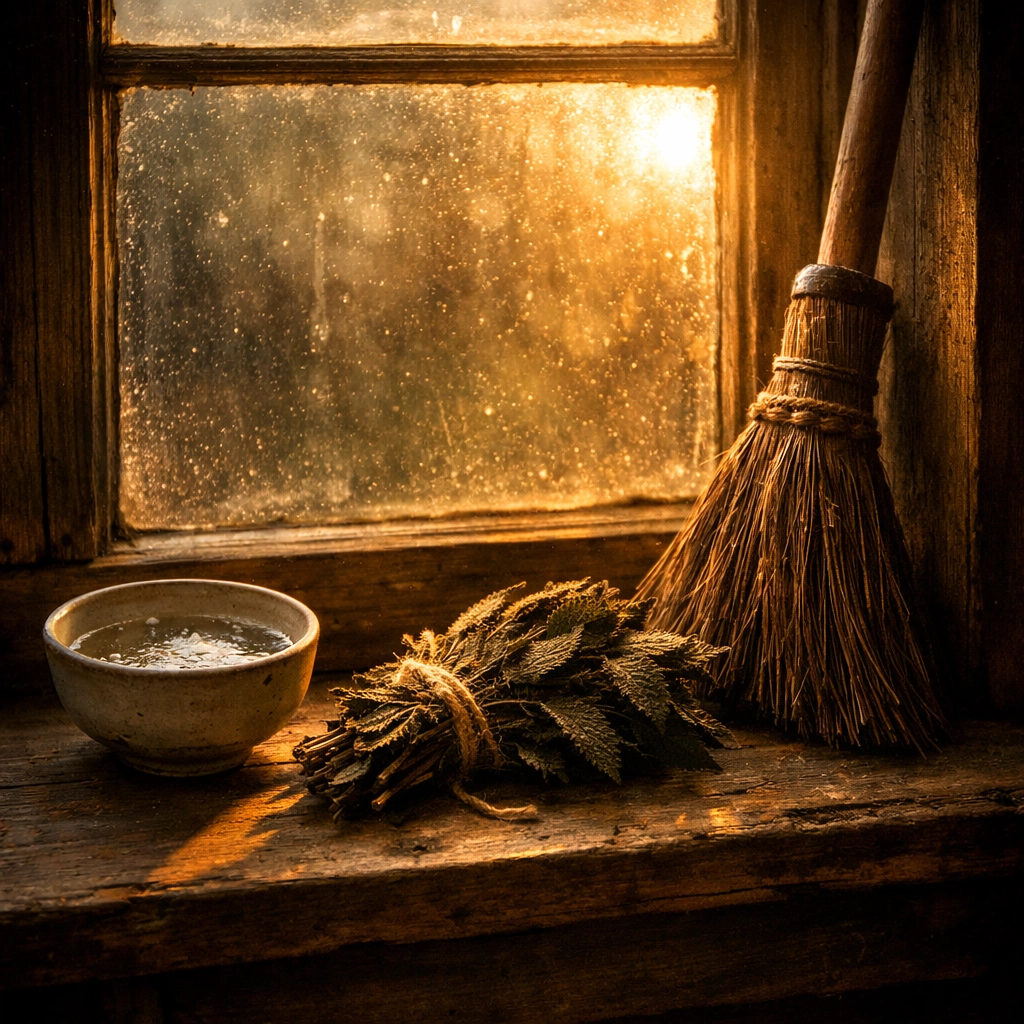
Pay special attention to thresholds: doorways, windowsills, and entryways. These liminal spaces act as gateways between inside and outside, between what was and what is becoming. A simple sweeping or washing of these areas with saltwater can refresh their protective qualities.
For your body, consider a ritual bath infused with herbs aligned with spring's energy. Nettles, dandelion leaf, or violet can be steeped and added to bathwater as a way of honouring your physical form and washing away winter's weight. As you bathe, visualize any heaviness sinking into the water, leaving your body lighter and more receptive to the season's awakening.
This work is not performative. It is practical magic that creates energetic and physical space for growth.
Setting Intentions for the Season
The Spring Equinox is an ideal time to clarify what you wish to cultivate in the months ahead. Unlike the explosive energy of summer or the inward pull of autumn, spring asks for patient, deliberate planting.
Sit with a journal or piece of paper and consider what you want to nurture this season. These may be tangible goals: a new skill, a healthier relationship with your body, a creative project. They may also be internal shifts: greater patience, clearer boundaries, or a deeper connection to your practice.
Write your intentions clearly. Avoid vague language. Instead of "be happier," try "create daily rituals that honour rest and joy." Specificity gives your magical work direction.
Some practitioners choose to plant their intentions literally by writing them on biodegradable paper and burying them in soil, either in a garden or a small pot. As seeds germinate and roots take hold, the written intention mingles with the earth, a quiet act of commitment. Others keep their written goals on their altar throughout spring, revisiting and refining them as the season progresses.
This is not manifestation theater. It is the traditional practice of aligning your will with the natural world's cycles and tending your goals with the same care you would give a seedling.
Correspondences for Ostara
Understanding the symbolic and energetic correspondences of the Spring Equinox allows you to work in harmony with the season's inherent power.
Colours: Soft greens, pale yellows, pastels of pink and lavender, and fresh white reflect the delicate energy of early spring. These are not the deep, saturated hues of summer but the tender shades of new growth.
Symbols: Eggs (representing potential and fertility), seeds, nests, hares and rabbits, budding branches, spring flowers, and representations of balance (such as scales or equal-armed crosses) all carry Ostara's energy.
Herbs and Plants: Daffodils, crocuses, violets, primrose, dandelion, nettle, clover, and early wildflowers. If you gather any of these from the wild, do so respectfully and sustainably, taking only what you need and offering thanks.
Foods: Fresh greens, asparagus, peas, sprouts, eggs, honey, dairy, light breads, and anything that feels vibrant and alive after winter's heavier fare.
Deities and Spirits: While traditional witchcraft does not require deity work, those who honour specific figures may call upon goddesses and gods associated with spring, fertility, and renewal. Spirits of place, particularly those tied to gardens, fields, and waterways awakening from winter, may also be acknowledged.
These correspondences are not rigid rules. They are starting points. Use what resonates with your practice and the land where you live.
Creating an Ostara Altar
Your altar is a focal point for seasonal energy and a physical anchor for your intentions. For Ostara, build an altar that reflects balance, growth, and the threshold between winter and spring.
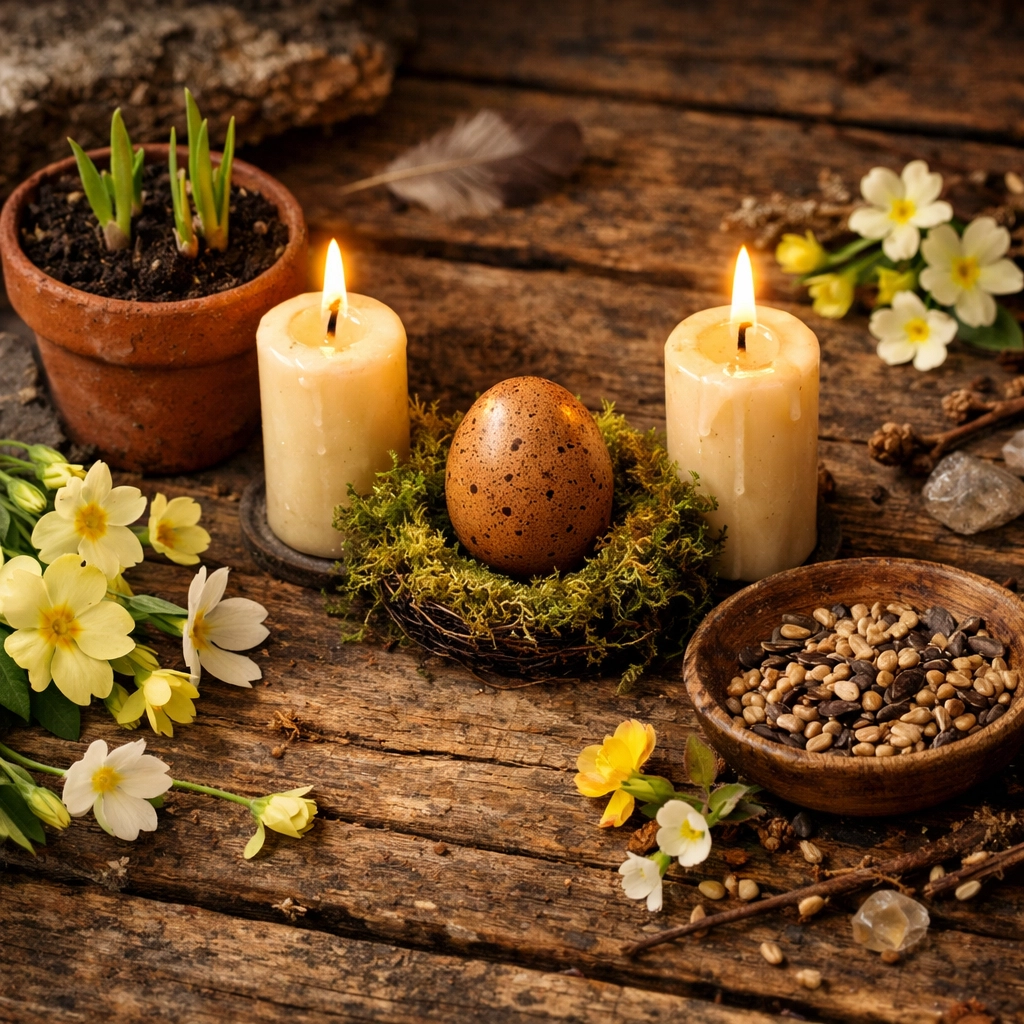
Begin with a clean surface. Lay down a cloth in spring colours if you wish, though bare wood or stone works just as well. Place representations of balance at the centre: perhaps a pair of candles (one for light, one for dark), a small set of scales, or simply a single egg symbolizing wholeness and potential.
Add fresh flowers or budding branches gathered from your local area. If flowers are not yet blooming where you live, dried flowers from last season or even drawings and images of spring plants work well. Include seeds, either loose or in small bowls, to represent what you are planting in your life.
A dish of earth or a small potted plant brings the energy of soil and growth directly onto your altar. Some practitioners place written intentions beneath the pot or bury them in the soil itself.
Candles in pale yellow, green, or white can be dressed with oils aligned with growth and renewal. Light them during meditation, ritual work, or simply when you wish to connect with the season's energy.
Keep your altar tended throughout spring. Replace wilted flowers, water living plants, and adjust the space as your intentions evolve.
Ritual Practices for the Equinox
There is no single "correct" way to observe Ostara. What matters is that your practice feels meaningful and aligned with your path. Here are several traditional approaches:
Seed Blessing and Planting
Gather seeds you plan to plant, either in a garden or in pots. Hold them in your hands and speak your intentions over them. Visualize the growth you wish to see, both in the plants and in your life. Plant the seeds with care, offering water and a few words of encouragement. Tend them throughout spring as a living reminder of your commitment.
Egg Magic
Eggs are potent symbols of potential. You can decorate them with natural dyes made from herbs and flowers, inscribe them with sigils representing your goals, or simply hold a raw egg in your hands and charge it with intention before burying it in your garden as an offering to the land. Cooked eggs can be eaten mindfully as part of a ritual meal, each bite an acknowledgment of nourishment and life.
Balance Meditation
Sit quietly at dawn or dusk on the equinox. Light two candles of equal size. As they burn, reflect on the balance in your own life. Where do you need more light? Where do you need rest? What needs to be released, and what needs tending? Sit with these questions without rushing to answers.
Walking the Land
Spend time outdoors observing the changes happening around you. Notice which plants are emerging, where water is flowing, and how the quality of light has shifted. Bring small offerings such as breadcrumbs, water, or a few kind words to leave at a tree, stream, or threshold. This practice reconnects you to the living world and honours the spirits of place.
Feasting and Community
Food is magic. Preparing and sharing a meal aligned with the season is a form of devotion and celebration.
Focus on fresh, vibrant ingredients that reflect spring's awakening. A simple meal of sautéed asparagus, soft-boiled eggs, fresh bread with honey, and herbal tea honours the season without requiring elaborate preparation. If you enjoy baking, consider making a honey cake or sweet bread, offered first to any spirits or deities you work with before being shared.
If you celebrate with others, invite each person to share one intention for the season or one thing they are releasing. This simple act of witnessing each other's goals strengthens community bonds and holds everyone accountable to their growth.
Eating alone can be just as powerful. Set your table with care, light a candle, and eat slowly, acknowledging each flavour and texture as a gift from the land.
Final Thoughts
The Spring Equinox is not a one-day event. It is a threshold, a doorway into the growing season. The work you do now, the intentions you set, and the care you bring to your practice will unfold over the weeks and months ahead.
Approach Ostara with patience. This is not the time for explosive transformation. It is the time for planting, for tending, for trusting that what you nurture will grow in its own time. Magic rooted in the rhythms of the earth does not force or rush. It aligns, honours, and tends.
Whether you spend the equinox in quiet reflection, in ritual celebration, or simply noticing the subtle shifts in light and air, you are participating in one of the oldest patterns known to our species. Spring returns. Life renews. And you, as a practitioner walking this path, are part of that ancient, unbroken cycle.