
The Witch's Tools: The Stang and the Blade
Walk into any metaphysical shop and you'll find shelves stocked with ritual tools: mass-produced athames with ornate handles, decorative wands, and altar kits packaged in matching sets. But if you dig into the actual history of traditional witchcraft, you'll find that the tools our predecessors used looked nothing like what's marketed today. Two of the most potent and historically grounded tools in the witch's arsenal are the stang and the blade, and understanding their true purpose can completely shift how you approach your practice.
These aren't accessories. They're working tools, rooted in function and folklore, not aesthetics.
The Stang: Staff of the Horned One
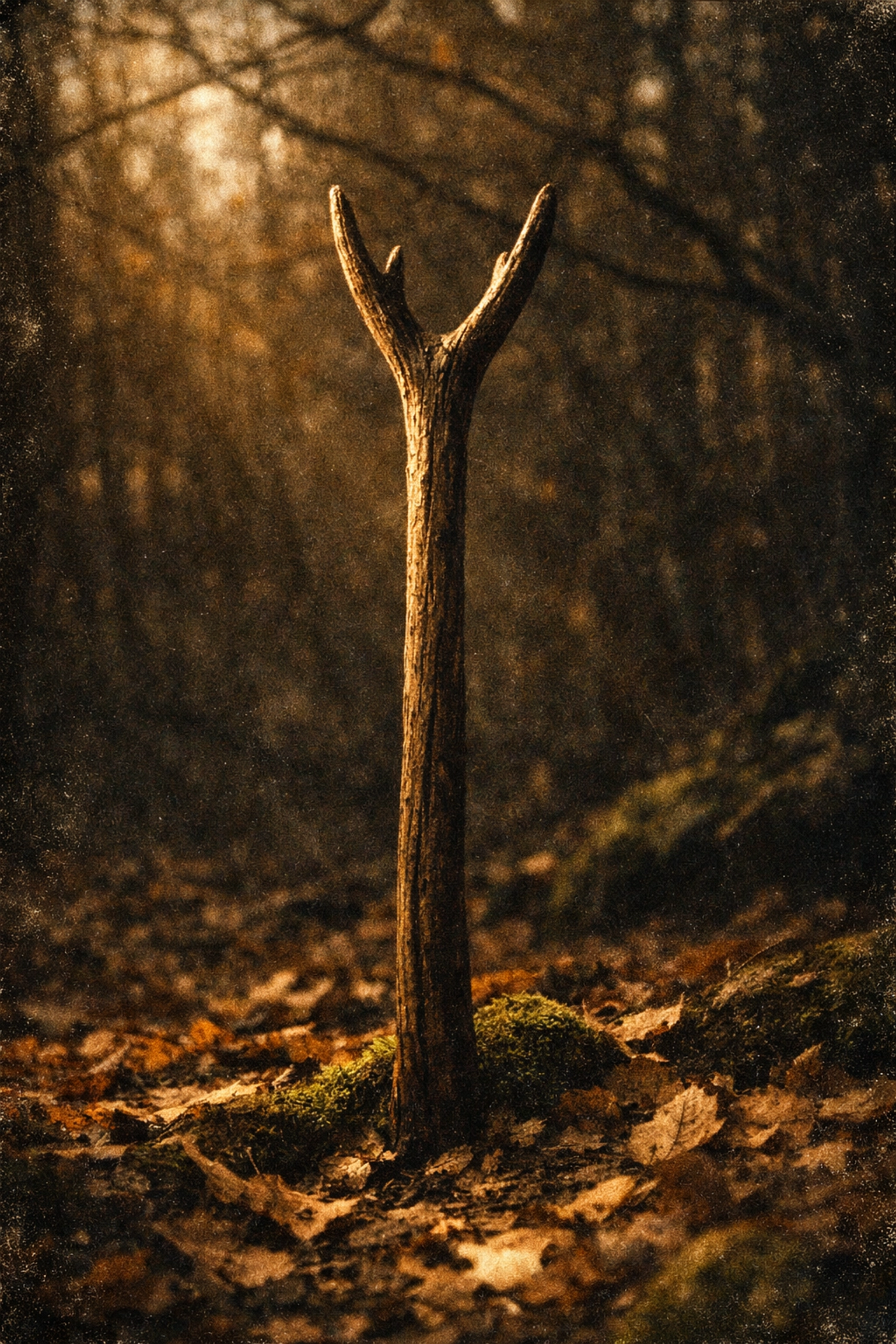
The stang is a forked staff, typically shoulder height or taller, with a natural fork at the top that resembles horns or antlers. In traditional witchcraft, it's one of the most versatile and symbolically layered tools you can work with.
Historically, the stang represents the Horned God, the wild and liminal aspect of nature that exists at the edges of civilization. It's the stag in the forest, the goat on the crag, the force of fertility and death intertwined. Some traditions also use it to represent the Goddess, depending on lineage and practice. The key is that it's not a generic "god energy" symbol. It's specific, rooted in the land and in the old spirits of place.
Symbolism and Function
The stang carries multiple layers of meaning. The fork at the top can represent the union of opposites: sky and earth, god and goddess, spirit and flesh. When placed upright, it becomes a kind of World Tree, a channel between realms. The shaft is the lingam, the fork is the yoni, and together they create a symbol of sacred union.
In ritual, the stang serves several purposes:
- Marking the boundary of sacred space. You can use it to trace the edge of your working circle or plant it at the center as an anchor point.
- Directing and focusing energy. The forked top can be used to point, draw down, or send energy in specific directions.
- Banishing unwanted spirits or influences. A stang driven into the ground at a threshold or boundary serves as a powerful protective tool.
- Facilitating spirit flight. Some practitioners use the stang as a physical anchor during trance work, holding it or placing it beneath the knees when journeying between worlds.
This isn't decorative. The stang is a workhorse tool, practical and potent.
Making or Finding Your Stang
Traditionally, a stang is made from a naturally forked branch, often from trees like hazel, ash, or oak. You can also craft one from forged iron, antlers, or even animal horns mounted on a wooden shaft. The materials matter less than the intention and relationship you build with the tool.
If you're foraging for a branch, do it respectfully. Ask permission from the tree, leave an offering, and take only what's needed. A stang isn't something you order online and expect to work with immediately. It requires tending, charging, and relationship.
Some modern practitioners carve sigils or symbols into the shaft or wrap it with cord, fabric, or found objects that hold personal significance. Others leave it plain, letting the wood speak for itself. There's no rulebook here, only what feels right within the framework of your practice.
The Blade: Athame and Boline
While the stang is a staff of connection and boundary, the blade is a tool of focus, will, and cutting. In traditional witchcraft, there are generally two types of blades you'll encounter: the athame and the boline, each with distinct purposes.
The Athame
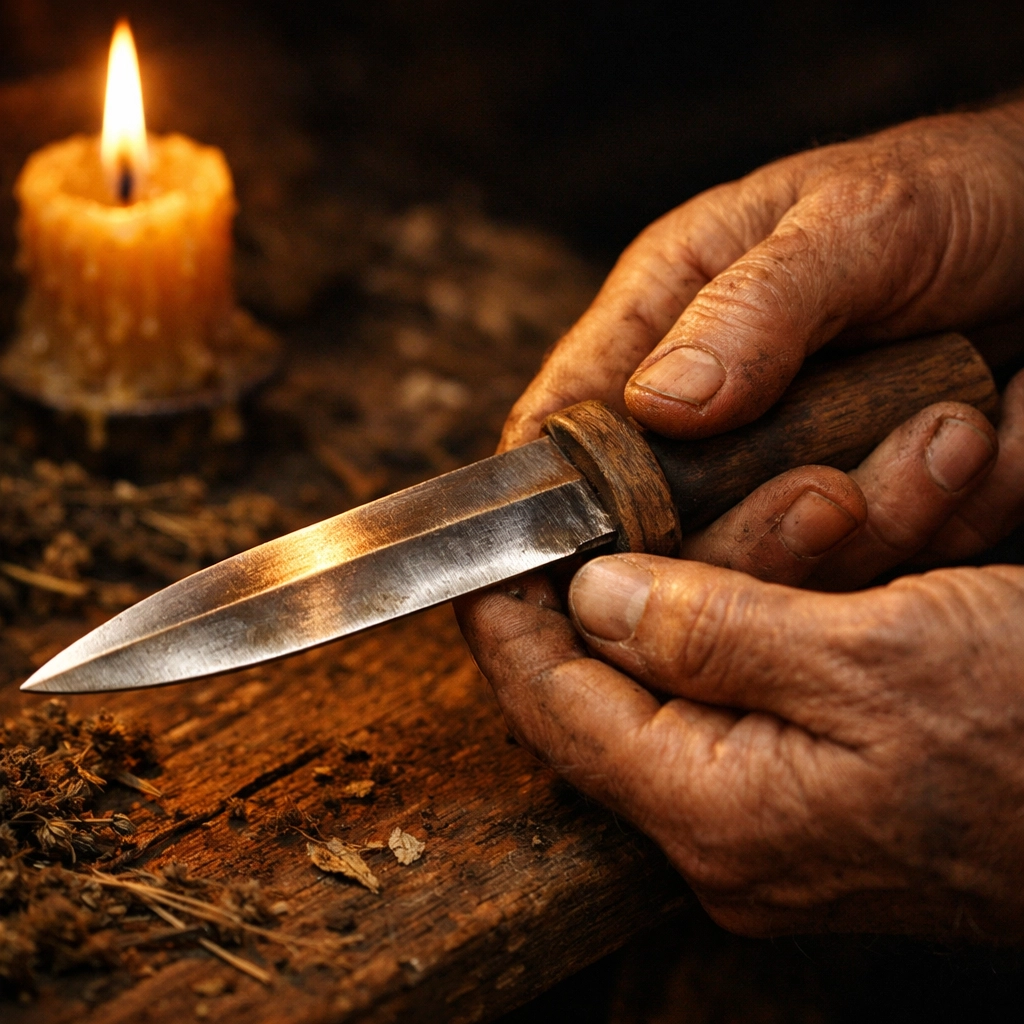
The athame is a ritual knife, often double-edged, with a handle that may be plain wood, bone, or horn. It's not used for physical cutting. Instead, it's a tool for directing personal power and shaping energy.
In many traditions, the athame is associated with the element of Fire, not Air as it is in some modern Wiccan practices. This matters because it shifts the tool's function from intellectual or communicative work to something more primal and transformative. Fire cuts, it transforms, it demands respect.
Common uses for the athame include:
- Casting the circle. The blade traces the boundary of sacred space, cutting a division between the mundane and the magical.
- Carving sigils or symbols in the air. This can be part of invocation, banishing, or sealing a working.
- Representing the masculine or projective force in ritual. In some rites, the athame is paired with a cup or chalice to symbolize union.
The athame doesn't need to be sharp. Some are intentionally dull because they're never meant to cut anything physical. What matters is the energy and intention you invest in it.
The Boline
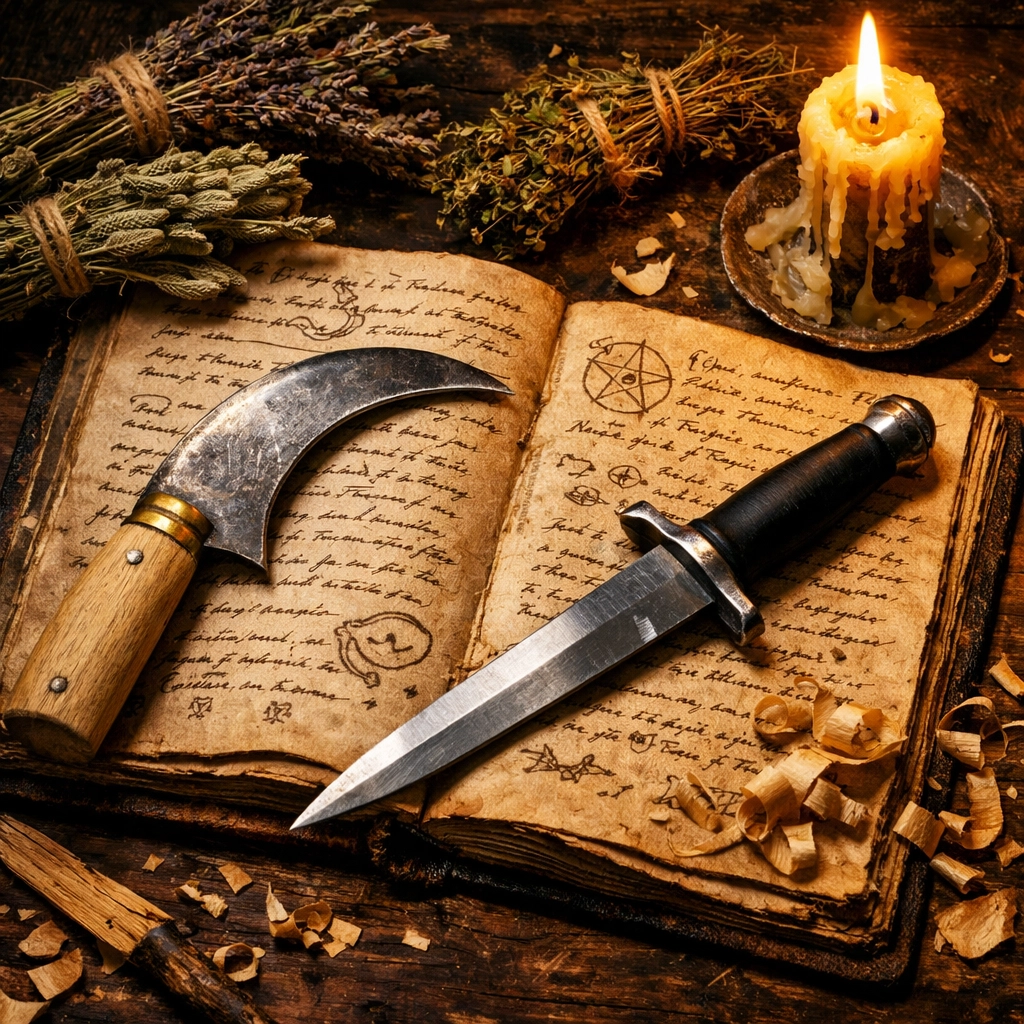
The boline, on the other hand, is a working blade. It's usually curved, with a white or light-colored handle to distinguish it from the athame. This is the knife you actually use to cut things: herbs, cords, inscriptions into candles, carvings into wooden tools.
If the athame is ceremonial, the boline is practical. It's the blade that does the messy, physical work of magic. Harvesting plants, cutting poppets, trimming wicks, carving runes into a stang or wand. It's a blade of action, not just symbol.
Many traditional practitioners keep their boline sharp and well-maintained because it's a functional tool. You wouldn't let your kitchen knives go dull, and the same respect applies here.
Traditional Tools vs. Modern Market Magic
Here's where things get muddy. The modern metaphysical market has taken tools like the athame and diluted their meaning, packaging them as part of "starter witch kits" with color-coded associations and oversimplified uses. You'll see athames sold with ornate fantasy handles, marketed as tools of Air because they "cut through confusion" or some other vague pop-spiritual reasoning.
Traditional witchcraft doesn't work that way. The tools aren't symbols you collect. They're extensions of your will, your body, and your relationship with the unseen. A stang isn't powerful because it has horns carved into it. It's powerful because you've worked with it, fed it, and built a relationship with it over time.
If you're coming from a Wiccan or eclectic background, that's fine. But if you want to work with these tools in a traditional context, you need to understand their origins and treat them accordingly. This means:
- Prioritizing function over aesthetics
- Sourcing or making tools with intention and care
- Building a relationship with each tool before expecting results
- Respecting the lineage and folklore these tools come from
Building Relationship with Your Tools
A stang or blade isn't magical the moment you acquire it. It becomes magical through use, relationship, and respect. Here are some ways to deepen that connection:
Cleanse and consecrate. This doesn't mean smoke-cleansing with white sage (please, let's retire that trend). It means ritually preparing the tool for its purpose. You might wash a blade with salt water, pass it through fire, or bury it for a night to ground it. A stang might be anointed with oil, wrapped with intention, or left outside under the moon.
Feed it. This might sound strange, but traditional tools were often "fed" with offerings. A drop of wine, a bit of oil, a smear of blood if that's within your practice. The idea is that the tool becomes a living partner in your work, not a passive object.
Work with it regularly. Don't let your tools gather dust. A stang left in the corner loses its charge. A blade that's never used forgets its purpose. Even if you're not doing formal ritual, touch them, hold them, keep them present in your practice.
Let them age. The best tools are the ones that show wear. A stang with weathered wood, a blade with a patina, these are signs of use and relationship. Don't chase perfection. Chase function.
Final Thoughts
The stang and the blade aren't tools you need in order to practice witchcraft. Plenty of traditional practitioners work without them. But if you're drawn to these tools, if they call to you, then it's worth doing the work to understand them properly.
Strip away the marketing, the color-coded correspondences, the fantasy aesthetics. What you're left with is something older, wilder, and far more potent. A forked staff that connects worlds. A blade that cuts and shapes will. Tools that do the work, not just sit on an altar looking pretty.
If you want to explore more about traditional witchcraft tools and practices, you can find deeper dives and hands-on guidance through resources at Spiral Rain. The work is there if you're ready for it.